KTA Staff

pipe coatings

Interior Pipe Coatings for Transporting Potable Water – Types and Considerations

Introduction Throughout most the world in developed countries, the public relies on access to a safe drinking water supply; something we frequently take for granted until it is compromised. Potable water frequently traverses through steel pipe to deliver it both safely and economically. However, because water in contact with steel will cause it to corrode, […]

Interior Pipe Coatings for Transporting Potable Water – Types and Considerations Read More »

The Missing Piece: Collaborations Between Field Investigators and Laboratory Chemists

Chances are, you have seen at least one procedural cop drama over the years. These shows all tend to follow a fairly standard formula: the crime occurs, the investigator is called in, the investigator gathers clues and interviews suspects, evidence is sent to a laboratory to confirm or refute theories, and by the end of

The Missing Piece: Collaborations Between Field Investigators and Laboratory Chemists Read More »

cross hatch tape

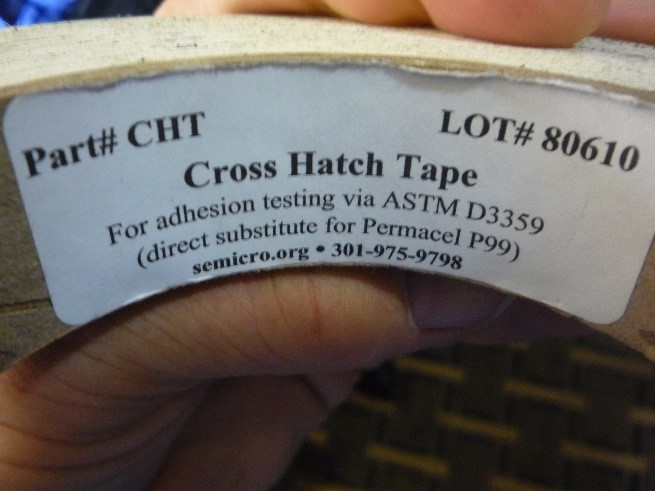
Coating Adhesion Testing using Knife/Tape Methods

Introduction Adhesion is an important physical characteristic of applied coating films and systems, and testing is frequently used as an indicator to whether an adequate bond exists between the substrate and primer (first coat) and/or between coats in multiple coat applications.  Adhesion testing may be a requirement of a coating specification, or may be used

Coating Adhesion Testing using Knife/Tape Methods Read More »

crane operator

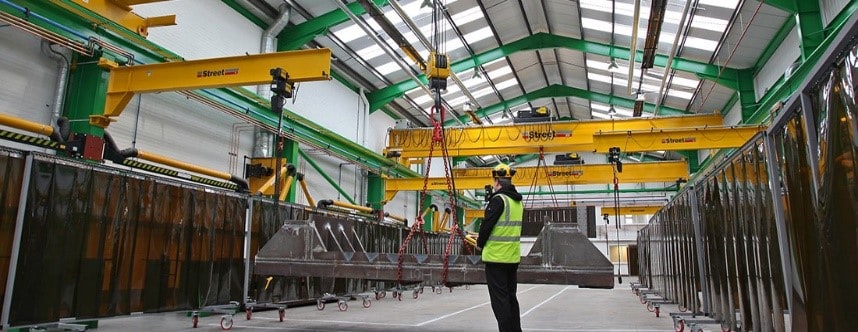
Use of Overhead Cranes, Powered Industrial Trucks, and Slings – Risks of Unsafe Use and OSHA/ANSI Requirements for Training and Operation

Introduction Efficient handling of materials is vital to the steel fabricating and coating shop processes. These facilities typically employ powered industrial trucks, overhead and gantry cranes, and slings to move tons of materials such as steel within the confines of a building, between buildings, and to/ from transportation vehicles. Material handling is not done without

Use of Overhead Cranes, Powered Industrial Trucks, and Slings – Risks of Unsafe Use and OSHA/ANSI Requirements for Training and Operation Read More »

KTA Podcast #1 – Inorganic vs. Organic Zinc Rich Primers

Ken Trimber (KTA President) moderates as Bill Corbett (KTA COO) and Jim Machen (KTA Sr. Coatings Consultant) debate the merits of using inorganic vs. organic zinc rich primers. This 33 minute podcast finds Mr. Machen promoting the use of organic zinc rich primers, while Mr. Corbett supports the use of inorganic zinc rich primers. The

KTA Podcast #1 – Inorganic vs. Organic Zinc Rich Primers Read More »

surface profile pitted steel

Surface Profile Measurement Options on Rough/Pitted Steel Surfaces

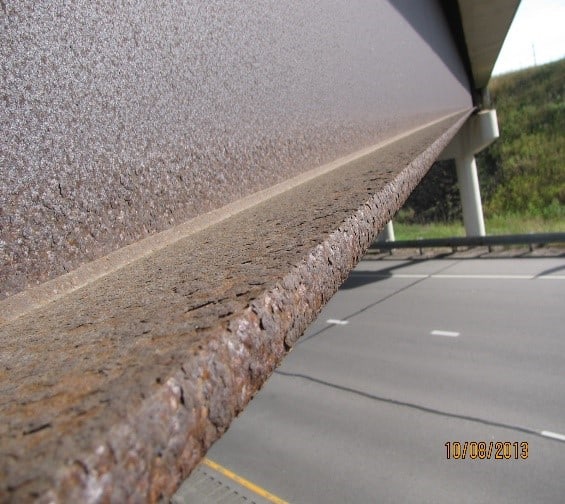
Introduction Surface profile is defined as a measurement of the maximum peak-to-valley depth generated by abrasive blast cleaning and impact-type power tools. These operations effectively increase the surface area and provide an “anchor” for the applied coating system. The surface profile depth must be compatible with the total coating system thickness; typically, the thicker the

Surface Profile Measurement Options on Rough/Pitted Steel Surfaces Read More »

beryllium osha

OSHA’s Final Rule on Beryllium: Key Provisions and Proposed Modifications Affecting the Abrasive Blast Cleaning Industry

Introduction The International Agency for Research on Cancer (IARC) classifies beryllium and beryllium compounds as carcinogenic to humans, and the Environmental Protection Agency (EPA) classifies inhaled beryllium as a possible carcinogen.  Despite its toxicity, beryllium is an important material in the aerospace, electronics, energy, telecommunication, energy, medical and defense industries due to its physical properties,

OSHA’s Final Rule on Beryllium: Key Provisions and Proposed Modifications Affecting the Abrasive Blast Cleaning Industry Read More »

service life

Expected Service Life and Cost Considerations for Maintenance and New Construction Protective Coating Work

Designed to assist the coatings engineer or specifier in identifying candidate protective coating systems for specific service environments applicable to a broad array of industries, this guide provides the following. Commonly used generic coating systems. Service life for each in specific environments. Current material costs. Current field and shop painting costs. Guidelines for calculating approximate

Expected Service Life and Cost Considerations for Maintenance and New Construction Protective Coating Work Read More »

coating failure

The Sky is Falling! Or is it Paint Chips? Failure of a Dry-Fall Coating Applied to the Interior of Previously Painted Metal Decking

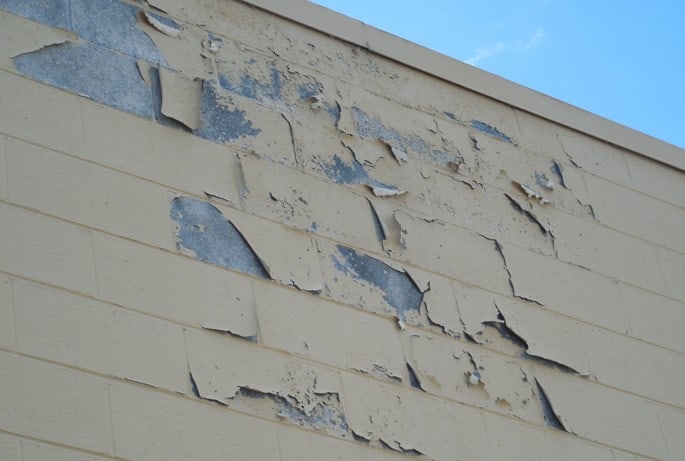
This Month’s Case Was Selected From Several Investigations Related To Failures That Occur When Applying Coating To The Underside Of Metal Deck Panels (Fig. 1). This Case Focuses On An Adhesion Failure Of Coatings Applied To Previously Painted Deck Panels. A paint contracting company was hired to apply an epoxy ester dry-fall coating to portions

The Sky is Falling! Or is it Paint Chips? Failure of a Dry-Fall Coating Applied to the Interior of Previously Painted Metal Decking Read More »

delamination

Coating System Selection and Determining “Or Equal”

The Construction Specifications Institute (CSI) provides a format for preparing specifications that is often adopted for use in the coatings industry. It contains three primary sections, including General, Products and Execution.  The Products section typically contains the specified coating system. There are several ways that a coating system can be specified, one of which is

Coating System Selection and Determining “Or Equal” Read More »