KTA Staff

coating failure water tank

Investigating Failure: Elevated Water Tank Coating Warranty Repairs

A 1930s-era riveted steel tank with a capacity of 1.5 million gallons was one of the largest water tanks in the world at the time of its construction. A radial cone-design tank with a 6-foot-diameter riser and 20 legs, it is approximately 175 feet in height and 80 feet in diameter. The available painting history […]

Investigating Failure: Elevated Water Tank Coating Warranty Repairs Read More »

abrasive cleanliness

The Importance of Monitoring Abrasive Cleanliness

Proper surface preparation is one of the most critical steps towards maximizing the life of a coating system. If coatings are applied to improperly prepared surfaces, the system is much more likely to fail prematurely. Abrasive blast cleaning is the most common and productive form of surface preparation. Abrasive selection is a key component to

The Importance of Monitoring Abrasive Cleanliness Read More »

application

When to Use Conventional versus Airless Spray

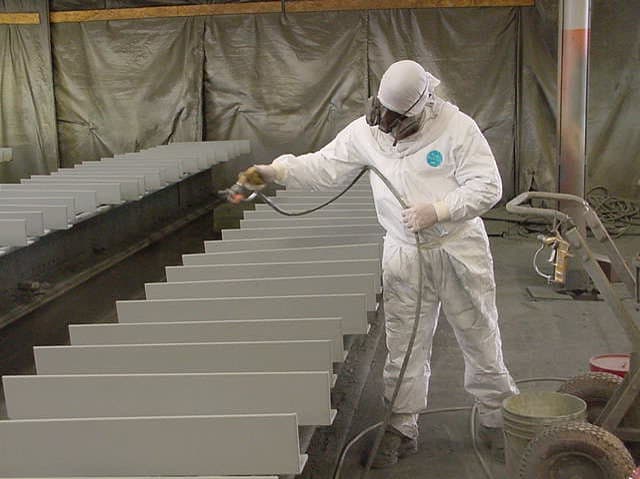
When coating parts or structures, there are several application methods to consider, ranging from simple brush and roller to various types of spray application. The application method selected can be based on a variety of factors and conditions. This article focuses on two spray methods: conventional (air) spray and airless spray. Conventional (air) Spray Conventional

When to Use Conventional versus Airless Spray Read More »

calibration verification

Calibration, Verification of Accuracy and Adjustment… Synonyms or Differences in Terminology?

“Do I have to maintain inspection gage calibration and certification?  Why don’t they retain their calibration over time? Do I need to verify gage accuracy on a regular basis? How often? What is the difference between calibration and verification of accuracy?” These are common questions in the coatings industry.  A simple answer is that without

Calibration, Verification of Accuracy and Adjustment… Synonyms or Differences in Terminology? Read More »

bolted bridge connections

Preventing Coating Problems and Failures on Bolted Bridge Connections – F-Files: Mechanisms of Failure

Rather than describe a failure that has already occurred, this article addresses key steps to follow when painting bolted connections in order to prevent failures from occurring by focusing on surface preparation and painting practices that have been used successfully on bolted bridge connections such as splice plates and gusset connections for new construction projects

Preventing Coating Problems and Failures on Bolted Bridge Connections – F-Files: Mechanisms of Failure Read More »

Free eBook – Painting Slip Critical Bolted Connections: Confusion, Concerns, and Cautions

Click Below Download KTA’s Free eBook on Painting Bolted Connections KTA President, Ken Trimber, delivers a compelling eBook filled with topics such as: Testing of Coatings for Use in Slip-Critical Bolted Connections Coefficient of Friction (COF) Testing Tension Creep Testing Classification of Slip Coefficient and Tension Creep Results 13 Frequently Asked Questions & Answers Additional

Free eBook – Painting Slip Critical Bolted Connections: Confusion, Concerns, and Cautions Read More »

Free eBook: Pipeline Coatings – Volume 3: Verifying the Quality of Coating Installation Post-Application

Click Below to Download Volume 3 of KTA’s Pipeline Coatings Series The last of three volumes, this E-Book provides information on the proper use of test instruments for verifying the quality of the application of protective coatings after the installation process is complete.  It is applicable to new pipe in the shop, field splices (girth

Free eBook: Pipeline Coatings – Volume 3: Verifying the Quality of Coating Installation Post-Application Read More »

Free eBook: Pipeline Coatings – Volume 2: Verifying the Quality of Coating Application

Click Below to Download Volume 2 in KTA’s Pipeline Coatings Series The second of three volumes, this eBook provides information on the proper use of test instruments for verifying the quality of the application of protective coatings.  It is applicable to new pipe in the shop, field splices (girth weld areas), existing pipe in the

Free eBook: Pipeline Coatings – Volume 2: Verifying the Quality of Coating Application Read More »

Free eBook: Measuring Coating Thickness According to SSPC-PA 2

Click the Image Below to Download your free SSPC-PA 2 eBook “Coating thickness shall be measured in accordance with SSPC: The Society for Protective Coatings Paint Application Standard No. 2 (SSPC-PA 2)” is a simple enough statement, yet this common specification requirement is often misinterpreted….. In This eBook, You’ll Learn… A Brief History of SSPC-PA

Free eBook: Measuring Coating Thickness According to SSPC-PA 2 Read More »