Uncategorized

surface roughness

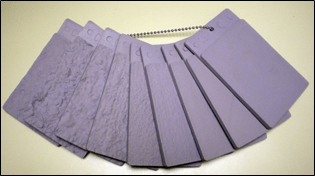
User Options for Surface Roughness Compensation When Measuring Dry Film Thickness of Coatings on Metal Surfaces

Two standards address the use of non-destructive dry film thickness gages: ASTM D7091, Standard Practice for Nondestructive Measurement of Dry Film Thickness of Nonmagnetic Coatings Applied to Ferrous Metals and Nonmagnetic, Nonconductive Coatings Applied to Non-Ferrous Metals and SSPC-PA 2, Procedure for Determining Conformance to Dry Coating Thickness Requirements. Both address the need to compensate […]

User Options for Surface Roughness Compensation When Measuring Dry Film Thickness of Coatings on Metal Surfaces Read More »

submittal reviews

Managing Submittal Reviews

Technical specifications for industrial painting projects frequently require the painting Contractor to submit plans and procedures describing how the surface preparation and coating application work will be performed. These are frequently referred to as “submittals.” The plans and procedures (submittals) are reviewed by the Owner or its representative for compliance with the requirements of the

Managing Submittal Reviews Read More »

ppe requirements

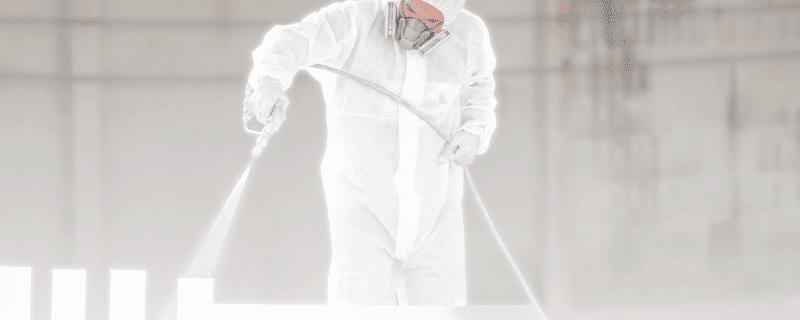
PPE Requirements for Polyurethanes Versus Non-Isocyanate Coatings: Is There Really a Difference?

AS SEEN IN June 2019 JPCL Magazine Isocyanates are reactive chemicals often used in foams, elastomers, fibers and polyurethane paints. Exposure to isocyanates has been reportedly linked to irritation of the mucous membranes of the eyes, gastrointestinal and respiratory tracts. More serious health effects include asthma and inflammation of the lungs. In the protective coatings

PPE Requirements for Polyurethanes Versus Non-Isocyanate Coatings: Is There Really a Difference? Read More »

surface soluble salt

Surface Soluble Salt Testing – The Latest in Extraction and Analysis Procedures

Introduction Chemical contaminants on a surface can include chloride, ferrous ions, sulfates and nitrates, among others. These chemicals or “salts” are deposited onto surfaces while the structure is in service, or during transportation of new steel to the fabrication shop. They are soluble in water, so they can typically be removed from surfaces by pressure

Surface Soluble Salt Testing – The Latest in Extraction and Analysis Procedures Read More »

kta 70th anniversary

KTA Celebrating 70th Anniversary in 2019

Pittsburgh, PA – KTA-Tator, Inc. (KTA), founded in 1949 as a sole proprietorship, is celebrating its 70th Anniversary this year. KTA was launched by Kenneth Tator to assist clients in selecting the optimum coating systems for protecting their plant’s infrastructure and equipment, while increasing the life expectancy of the coatings and reducing life-cycle costs. This was accomplished

KTA Celebrating 70th Anniversary in 2019 Read More »

Test Your Knowledge on Surface Preparation & Abrasive Blast Cleaning Standards

[interact id=”6041306635050f0017dae9f6″ type=”quiz” mobile=”false”] SSPC: The Society for Protective Coatings and NACE International (The merged organization is known at the Association for Materials Protection and Performance, or AMPP) has volunteer technical committees made up of subject matter experts that develop consensus standards that are drafted, balloted, approved, and published. Once published, these industry standards can

Test Your Knowledge on Surface Preparation & Abrasive Blast Cleaning Standards Read More »

delamination

Coating System Selection and Determining “Or Equal”

The Construction Specifications Institute (CSI) provides a format for preparing specifications that is often adopted for use in the coatings industry. It contains three primary sections, including General, Products and Execution.  The Products section typically contains the specified coating system. There are several ways that a coating system can be specified, one of which is

Coating System Selection and Determining “Or Equal” Read More »