Background
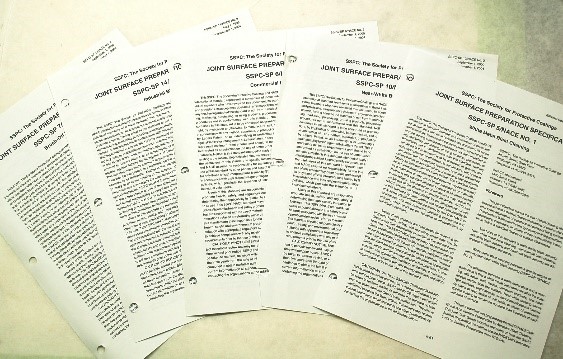
SSPC: The Society for Protective Coatings, NACE International and other trade organizations have volunteer technical committees made up of subject matter experts that develop consensus standards that are drafted, balloted, approved and published. Development of a new standard can take as short as 3 years and as long as 5-7 years, depending on the subject, the level of interest and the length of the balloting process. Once published, these industry standards can be referenced in a coatings specification, and invoked by contract once the bidding process is completed and the work is initiated by the contractor.
 These are called consensus standards since they are generated using widespread agreement between owners, contractors, engineers/consultants, and equipment/material suppliers. They are not government regulations, and are not legally binding until they become part of a contract (in this case between the facility owner and the contractor).
Referenced Requirements
SSPC standards contain both direct and indirect (or referenced) requirements. An example of a direct requirement for SSPC-SP 10/NACE No. 2, Near-White Metal Blast Cleaning is:
Near-white metal blast cleaned surface, when viewed without magnification, shall be free of all visible oil, grease, dust, dirt, mill scale, rust, coating, oxides, corrosion products, and other foreign matter. Random staining shall be limited to no more than 5% of each unit area of surface and may consist of light shadows, slight streaks, or minor discolorations caused by stains of rust, stains of mill scale, or stains of previously applied coating. This information is provided in the Definitions section of the standard. It is a direct requirement.
Here are a few examples of indirect or referenced requirements:
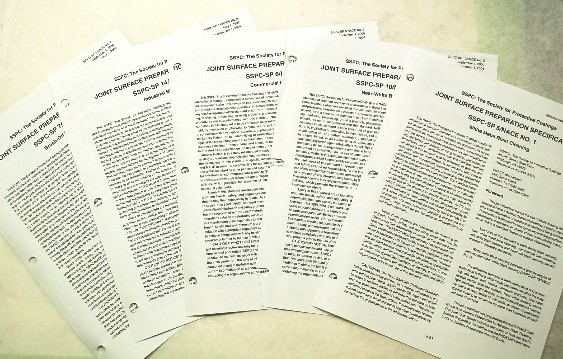
Example 1: The SSPC/NACE joint abrasive blast cleaning standards (SSPC-SP 7/NACE 4; SSPC-SP 14/NACE 8; SSPC-SP 6/NACE 3; SSPC-SP10/NACE 2; and SSPC-SP 5/NACE 1) also invoke several requirements by reference, including:
- Grease and oil removal and subsequent verification prior to blast cleaning, in accordance with SSPC-SP 1 Solvent Cleaning;
- Compressed air cleanliness testing in accordance with ASTM D4285 to verify the compressed air used to propel the abrasive is both clean and dry; and
- The abrasive cleanliness requirements listed in the SSPC Abrasive Standards (SSPC-AB 1, AB 2 and AB 3).
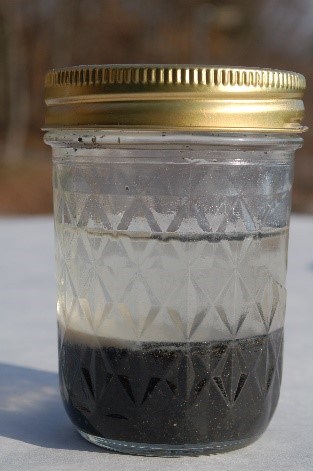 The testing for abrasive cleanliness includes two different criteria: oil content and water soluble contaminants. Oil content is evaluated upon receipt (SSPC-AB 1 and AB 3) and after each recycle (SSPC-AB 2) in accordance with ASTM D7393, Standard Practice for Indicating Oil in Abrasives to verify that the abrasive is not contaminated with oil. Water soluble contaminants are evaluated at the same frequency, in accordance with ASTM D4940, Standard Test Method for Conductimetric Analysis of Water Soluble Ionic Contamination of Blast Cleaning Abrasives to verify that the abrasive media does not contain water soluble contaminants that would cause a spike in conductivity exceeding 1,000 µS/cm.
Example 2: The SSPC surface preparation standards for hand tool (SSPC-SP 2), power tool cleaning (SSPC-SP 3, SP 11 and SP 15), and waterjetting (SSPC/NACE SP-WJ1-4) invoke grease and oil removal and subsequent verification prior to cleaning, by reference to SSPC-SP 1 Solvent Cleaning.
Since the SSPC standards indirectly invoke these referenced requirements, the contractor is responsible for performing these quality control checkpoints, even if the specification does not specifically address them. That is, they are automatically invoked by reference.
Complimentary Industry Standards
Duplicative standards or standards that appear to be the same but have conflicting requirements do not serve the industry well. Rather, standards-writing organizations should work together to avoid publishing new standards that have already been developed by other trade organization (provided they are robust), or worse that contain information that directly conflicts with another standard on the same subject.
SSPC and NACE standards often reference ASTM standards that describe, for example proper gage use, so that the SSPC and/or NACE standards can focus on frequency of measurements and acceptance criteria, and to avoid duplicity and listing conflicting requirements. Here are a few examples:
1.SSPC-PA 2, Procedure for Determining Conformance to Dry Coating Thickness Requirements references ASTM D7091, Standard Practice for Nondestructive Measurement of Dry Film Thickness of Nonmagnetic Coatings Applied to Ferrous Metals and Nonmagnetic, Nonconductive Coatings Applied to Non-Ferrous Metals. The content of the ASTM standard practice is focused on proper gage use, while the content of the SSPC procedure focuses on the frequency of measurements, how to determine if the measurements conform to the project specification and how to determine the magnitude of a nonconforming area.
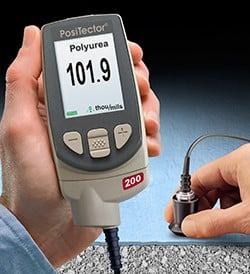 2. SSPC-PA 9, Measurement of Dry Coating Thickness on Cementitious Substrates Using Ultrasonic Gages references ASTM D6132, Standard Test Method for Nondestructive Measurement of Dry Film Thickness of Applied Organic Coatings Using an Ultrasonic Coating Thickness Gage. Similar to dry film thickness described above, the content of the ASTM standard test method is focused on proper gage use, while the content of the SSPC standard focuses on the frequency of measurements, how to determine if the measurements conform to the project specification, and how to determine the magnitude of a nonconforming area.
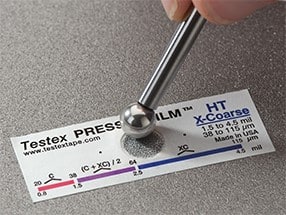 3,SSPC-PA 17, Procedure for Determining Conformance to Steel Profile/Surface Roughness/Peak Count Requirements references ASTM D4417, Standard Test Methods for Field Measurement of Surface Profile of Blast Cleaned Steel and ASTM D7127, Standard Test Method for Measurement of Surface Roughness of Abrasive Blast Cleaned Metal Surfaces Using a Portable Stylus Instrument. The content of the ASTM standard test methods is focused proper gage use and the number of readings to obtain per individual test area, while the content of the SSPC standard focuses on the minimum number of areas to measure, how to determine if the measurements conform to the project specification, and how to determine the magnitude of a nonconforming area.